
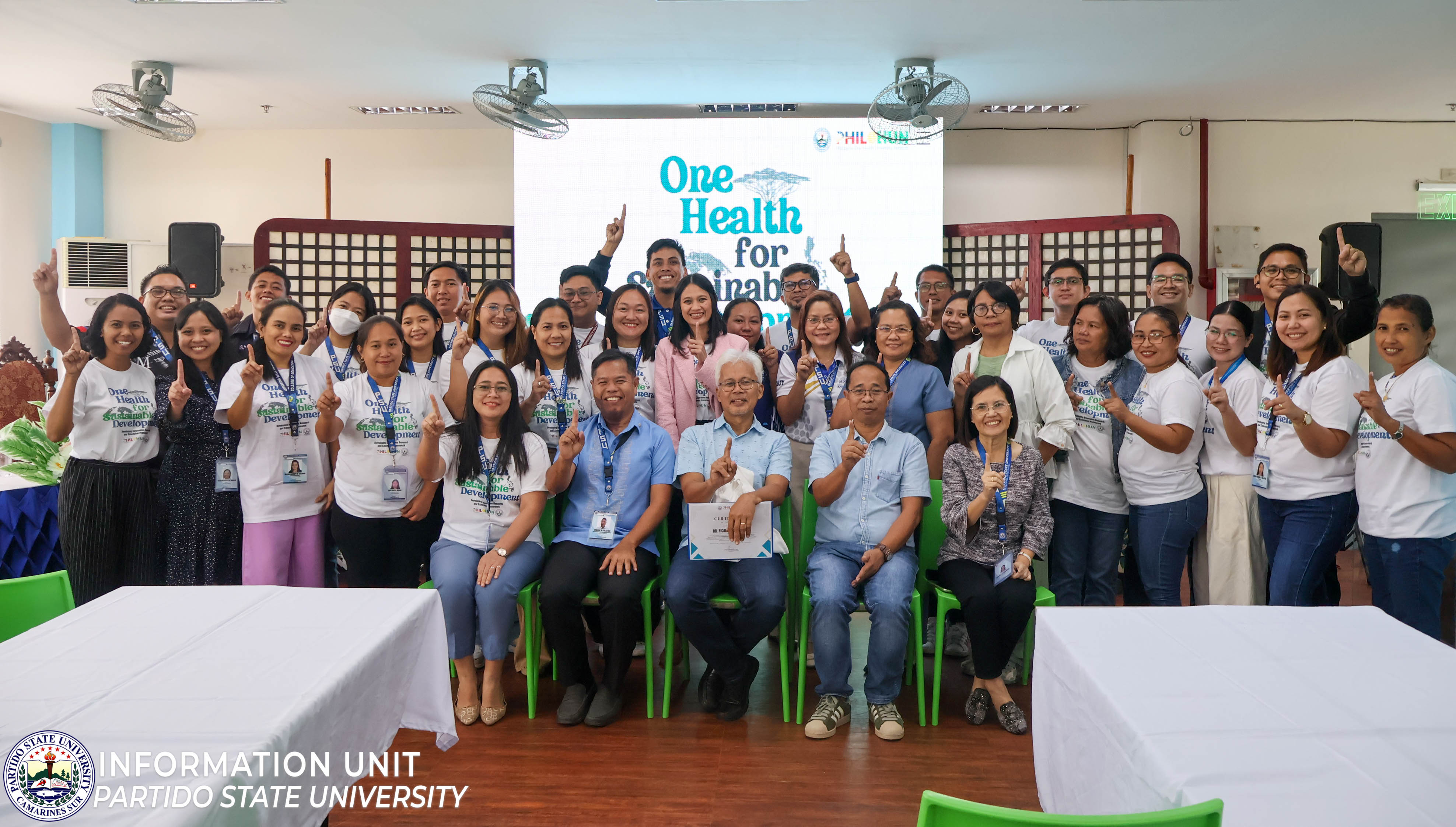
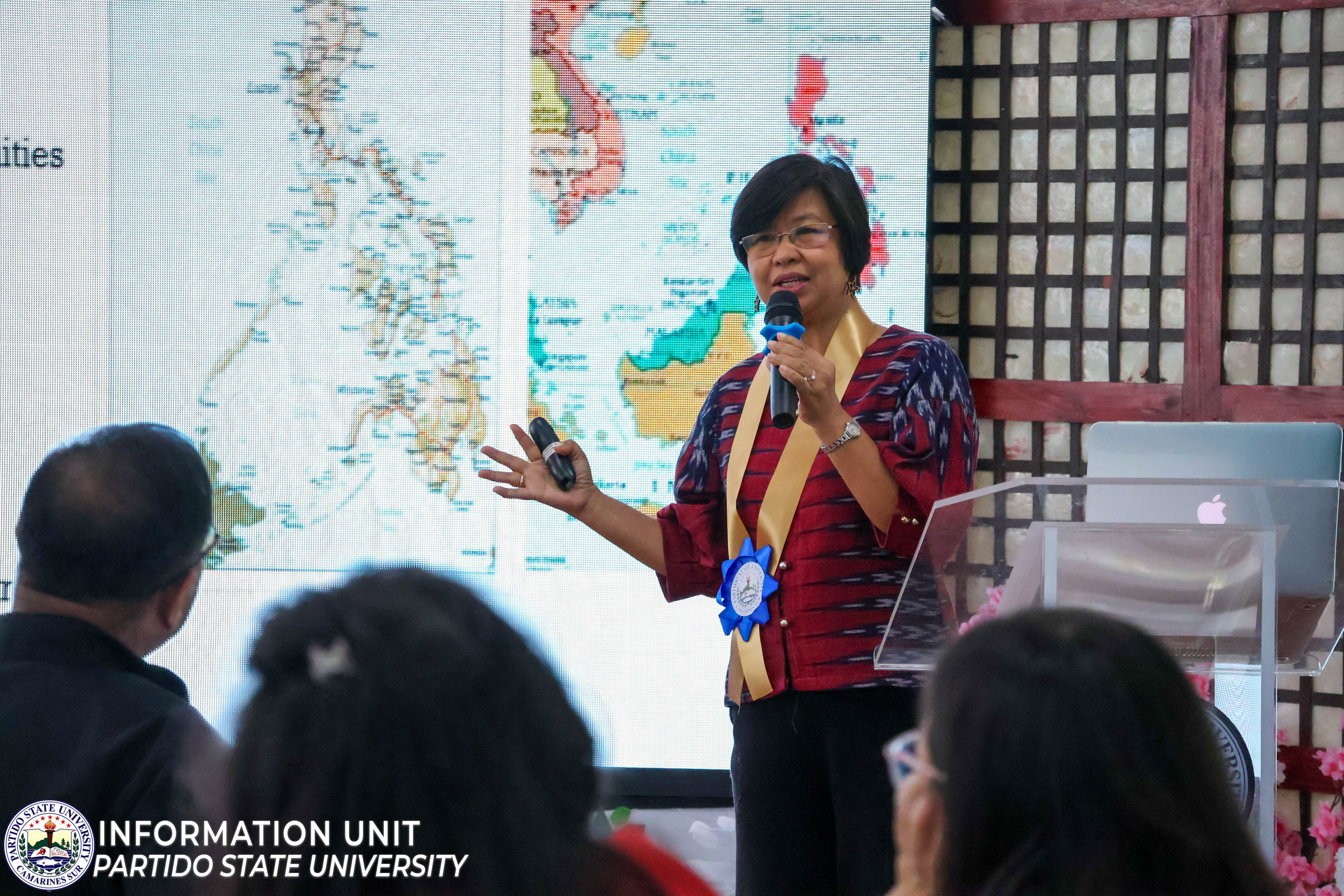

Partido State University (ParSU) successfully concluded its three-day forum, “𝙊𝙣𝙚 𝙃𝙚𝙖𝙡𝙩𝙝 𝙛𝙤𝙧 𝙎𝙪𝙨𝙩𝙖𝙞𝙣𝙖𝙗𝙡𝙚 𝘿𝙚𝙫𝙚𝙡𝙤𝙥𝙢𝙚𝙣𝙩: 𝘿𝙚𝙫𝙚𝙡𝙤𝙥𝙞𝙣𝙜 𝙄𝙣𝙣𝙤𝙫𝙖𝙩𝙞𝙫𝙚 𝙍𝙚𝙨𝙚𝙖𝙧𝙘𝙝 𝙖𝙣𝙙 𝙀𝙭𝙩𝙚𝙣𝙨𝙞𝙤𝙣 𝙁𝙧𝙖𝙢𝙚𝙬𝙤𝙧𝙠,” held on December 9 to 11, 2025 at the RDE Training Hall. The event convened researchers, faculty members, local government partners, and sectoral stakeholders in a unified effort to strengthen community-responsive and collaborative approaches in research and extension.
Anchored on the One Health framework, which recognizes the interconnectedness of human, animal, and environmental health, the forum underscored the need for integrated, science-based solutions to address complex development challenges. Resource Person, Dr. Vachel Gay V. Paller of the University of the Philippines Los Baños, emphasized that sustainable development can only be realized when all three pillars of health are protected through coordinated and evidence-driven interventions.
Across the sessions, discussions emphasized the urgency of interdisciplinary action to mitigate public health risks, environmental degradation, food insecurity, and climate-related vulnerabilities. Participants also shared research findings, best practices, and emerging priorities aligned with the Sustainable Development Goals.
The forum further highlighted how health and environmental systems directly shape local economies. Dr. Geraldine B. Dayrit, RMT, DRDM, SMicro, stressed that tourism remains a key driver of community development; however, its sustainability depends on the strict and consistent enforcement of Antimicrobial Resistance (AMR) protocols. She also reiterated the necessity of regular child health monitoring and targeted community-based interventions to curb AMR at both household and barangay levels.
The education sector’s role in combating AMR likewise emerged as a critical point of discussion. Representatives from Goa Community College underscored the importance of integrating AMR-focused content into teacher training programs to enhance health literacy among future educators and learners.
Providing institutional direction, ParSU Vice President for Research, Extension, and Knowledge Management, Dr. Raul G. Bradecina, presented his paper, “Developing a Framework for One Health Research.” He outlined ParSU’s emerging research and extension priorities and highlighted innovative initiatives, including the Agile Ecosystems through Rural Nutrition, Community Hygiene and Environmental Justice Project, aimed at improving community resilience and advancing equitable access to essential services.
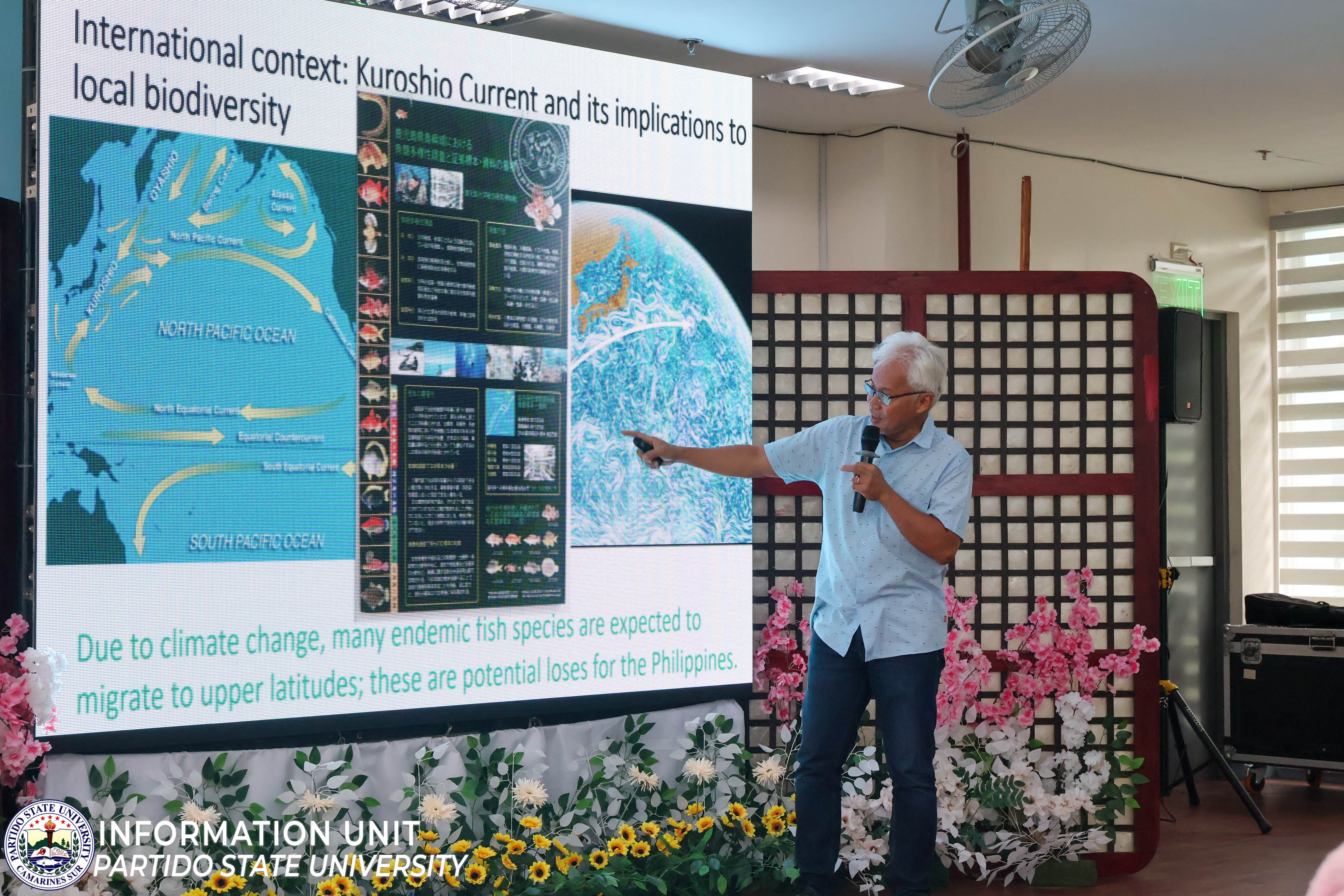
The forum also featured inputs from national experts. Dr. Ricardo Babaran, University Professor and Former Chancellor of the University of the Philippines Visayas, emphasized the critical role of biodiversity monitoring in advancing One Health initiatives amid intensifying climate conditions. Meanwhile, Dr. Emma L. Balad, Agricultural Center Chief of DA–BFAR II, provided essential insights on fisheries and aquatic ecosystem health.
During the plenary session, participants from academe and the health sector raised forward-looking questions and shared local perspectives, enriching the collaborative nature of the discussions.
In his message, ParSU Vice President for Administration and Finance Prof. Charlie V. Balagtas reaffirmed the core message of the week’s activity, reminding participants that the discussions shared were more than concepts but a call for lasting commitment. As he emphasized, “One Health is not just a concept, but a mindset – a commitment to work together, to listen, and to learn from each other,” urging everyone to translate their insights into meaningful action within their classrooms, laboratories, farms, and communities. He closed with a reminder that, “One Health is a continuous responsibility, one that requires ongoing advocacy, cooperation, and shared dedication.”
Collectively, the forum reaffirmed ParSU’s dedication to advancing people-centered, evidence-informed research and extension initiatives responsive to the evolving needs of Bicolano communities and the broader region.